I. The Recovery of the Divine Seed
The *Corpus Hermeticum* is a collection of seventeen Greek treatises that form the core of the Hermetic tradition. Traditionally attributed to Hermes Trismegistus—a syncretic figure combining the Egyptian Thoth and the Greek Hermes—these texts were "rediscovered" in Western Europe during the Renaissance, sparking a revolution in thought that directly influenced figures like Marsilio Ficino, Pico della Mirandola, and Isaac Newton.
Unlike modern philosophy, which often separates man from nature and the divine, the *Corpus Hermeticum* teaches a radical Unity. It describes a universe where the physical world is a living expression of the divine mind (Nous). Man is not a passive bystander in this drama but a "Divine Being" who has forgotten his origin and must "wake up" to his true nature through the process of gnosis (spiritual knowledge).
II. Poimandres: The Revelation of the Shepherd
The first treatise, *Poimandres*, is the most significant. It describes a vision experienced by a narrator (Hermes) while his senses were "bound in sleep."
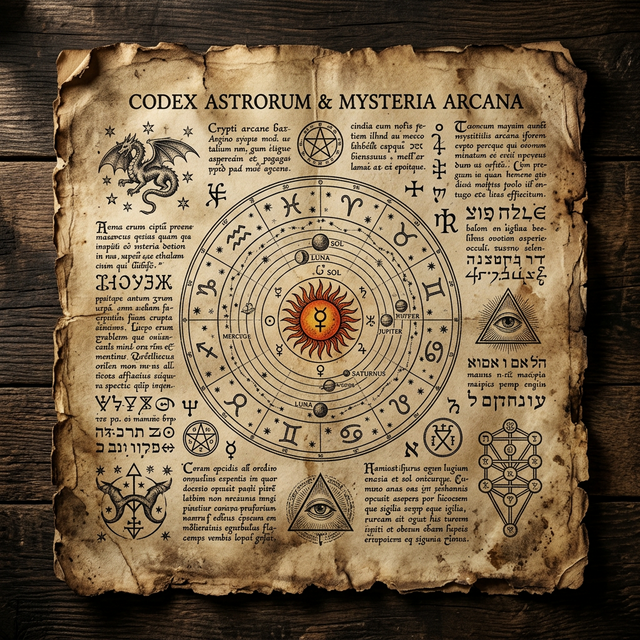
In this vision, a figure of immense size—the "Mind of Sovereignty"—appears and reveals the secrets of creation. Poimandres describes how the Light (God) produced the Word (Logos), and how the Logos in turn structured the material world through the seven planetary spheres.
The core message of *Poimandres* is that humans possess a spark of the divine mind. We are "mortal because of the body, but immortal because of the real Man." Salvation is not found through external rituals but through the internal realization of this divine heritage. By "becoming like God," the soul can ascend through the spheres and return to its source.
The Seven Stages of Ascent
- 1. Relinquishing the Moon's changeability
- 2. Leaving behind Mercury's deceptions
- 3. Casting off Venus's lustful desires
- 4. Surrendering the Sun's arrogance
- 5. Dropping Mars's rashness
- 6. Shedding Jupiter's greed
- 7. Overcoming Saturn's falsehoods
III. The Way of Gnosis: Mind and Matter
Throughout the treatises, the *Corpus Hermeticum* emphasizes that "the Mind is God." Everything we see is a projection of the divine imagination. This has profound implications for how we live. To "see" the world correctly is to see God in all things. "There is nothing which is not God," the text proclaims.
This is not an intellectual exercise but a total transformation of Being. The texts distinguish between *episteme* (rational knowledge) and *gnosis* (revelatory knowledge). Gnosis is described as a "rebirth" where the old self dies and a new, immortal self is born. This path requires discipline, silence, and the purification of the senses, allowing the Mind to perceive reality without the distortion of the physical senses.
IV. The Historical Context: Hellenistic Fusion
While traditionally dated to "time immemorial," modern scholarship places the writing of the *Corpus Hermeticum* in Hellenistic Egypt (approximately 1st to 3rd Century CE). The texts reflect a unique fusion of Egyptian temple wisdom, Platonic philosophy, and even early Jewish and Christian mysticism.
This "melting pot" of ideas produced a tradition that was both universal and specific. It provided a framework for understanding the nature of the soul that was independent of any specific temple or state religion. This universality is what allowed Hermeticism to survive for centuries, operating as an "underground stream" within Western culture, emerging whenever the need for personal spiritual experience overrode institutional authority.
V. The Legacy: From Ficino to Modernity
The impact of the *Corpus Hermeticum* on Western history cannot be overstated. When Cosimo de' Medici asked Marsilio Ficino to translate the *Corpus* before the works of Plato, he signaled that these texts were the foundation of all wisdom. This led to the "Magical Renaissance," where art, science, and spirit were seen as a single endeavor.
Today, the *Corpus Hermeticum* remains a vital source for anyone seeking a "Perennial Philosophy." It challenges the materialism of the modern age, offering a vision of the universe as a sacred, interconnected whole. To read these texts today is to participate in an ancient conversation about the nature of reality and the ultimate potential of the human spirit.
VI. The Journey of the Thrice-Greatest Scrolls
The historical narrative of the *Corpus Hermeticum* is a dramatic saga of loss and recovery that mirrors the spiritual themes of the text itself. While traditionally ascribed to an antediluvian Hermes Trismegistus, modern scholarship has localized the writing of these seventeen Greek treatises to the cultural melting pot of Roman Egypt between 100 and 300 CE. During this era, the declining traditional Egyptian priesthoods engaged in a sophisticated dialogue with Greek Platonic and Stoic thought, resulting in a unique "Technological" and "Philosophical" Hermetica.
Following the Christianization of the Roman Empire, the texts largely vanished from the Western consciousness, preserved only in the libraries of the Byzantine Empire and the Islamic Caliphates. The turning point came in 1460, when an agent of Cosimo de' Medici brought a nearly complete manuscript from Macedonia to Florence. The impact was immediate and electrical. Marsilio Ficino, commissioned to translate the work, believed he was handling the "Primordial Wisdom" (Prisca Theologia) that preceded even Moses. This belief fueled the intellectual fire of the Renaissance, providing a theological justification for the study of nature, magic, and human potential.
In the 17th century, the scholar Isaac Casaubon demonstrated that the Greek of the *Corpus* was later than previously thought, which temporarily dampened its reputation in academic circles. However, the discovery of the *Nag Hammadi Library* in 1945 provided Coptic versions of Hermetic texts, proving that the tradition was deeply rooted in genuine Egyptian religious practices. Today, the *Corpus Hermeticum* is recognized not as a historical forgery, but as a profound record of a living spiritual tradition that sought to unify the human mind with the divine cosmos at a time of immense cultural transition.
VII. The Metaphysics of the Immortal Man
Esoterically, the *Corpus Hermeticum* is a study of **Divine Anthropology**. The central symbol of the text is the "Anthropos" or the "Immortal Man"—the divine blueprint of humanity that existed before the fall into matter. Unlike the physical body, which is subject to the constraints of the [Seven Spheres](../symbols/zodiac-symbols.html), the Immortal Man is of the same essence as the Father. The treatises describe the human soul as a "Traveler" between dimensions, possessing the unique ability to participate in both the time-bound world and the eternal realm of the Mind.
The concept of the **Crater** or the "Vessel of Mind" is another vital symbol within the *Corpus*. In Treatise IV, Hermes describes how God filled a great bowl with Mind and sent it down to earth, inviting humans to "Dip themselves" in it to receive the gift of reason and spiritual sight. This is a visual metaphor for the **Gnostic Awakening**—the moment when the fragmented, sensory-driven ego is submerged in the universal intelligence. This "Baptism in Mind" is what allows the seeker to transcend the "False Darkness" of the material senses and perceive the "Universal Light" that animates all forms.
Through these symbols, the *Corpus* teaches that the universe is a **Living Hierarch of Minds**. From the "Highest Mind" (God) to the "Individual Mind" (Man), there is a continuous chain of intelligence. The symbols are the "Keys of Ascent," representing the various vibrational stations the soul must master to reclaim its divine inheritance. To study the *Corpus* is to engage in **Ontological Realignment**, training the mind to recognize the divine signatures in the architecture of the cosmos and the depths of the human psyche.
VIII. Hermetic Interpretation of the Sacred Dialogues
The *Corpus Hermeticum* is the definitive exposition of the **Principle of Mentalism**. "The ALL is MIND; The Universe is Mental." The treatises argue that the physical world is not an objective reality, but a "Thought-Form" projected by the Divine Mind. The Hermeticist understands that by aligning their own mind with the "Universal Mind" (Nous), they can gain mastery over the material circumstances of their existence. This is the secret of **Hermetic Gnosis**—the realization that the "Thinker" and the "Thought" are ultimately one.
The texts also embody the **Principle of Correspondence**. "He who knows himself, knows the All." The *Corpus* explains that because the human mind is a microcosm of the divine mind, the study of the self is the study of the universe. The "Way of Hermes" is an internal journey where the seeker explores the "Celestial Landscapes" of their own consciousness to find the laws that govern the stars. The dialogues serve as a "Mirror of the Soul," reflecting the divine proportions that are hidden beneath the dross of personality and worldly attachment.
Finally, the *Corpus* relates to the **Principle of Cause and Effect**. It describes how the soul, through its fall into matter, became subject to the "Tyranny of the Spheres" (Fate). However, through the attainment of Mind, the soul can rise above the mechanical laws of cause and effect and enter the realm of **Divine Sovereignty**. The treatises are instructions for "Rising Above the Stars"—not by escaping the world, but by becoming the "Master of the Rhythms" that drive the material world, transforming fate into a conscious participation in the divine plan.
IX. Practical Gnosis: The Way of Transfiguration
In practical Hermeticism, the *Corpus Hermeticum* is used for **Contemplative Visualization**, **Hymnic Invocation**, and **Silent Meditation**. The "Way of the Mind" involves a practice known as "Expansion of Consciousness," where the seeker intentionally visualizes their mind expanding to encompass the entire earth, the sun, and the distant stars. This is not a metaphor but a technical method for breaking the "Cage of the Senses" and achieving a felt-experience of the **Holographic Universe**. By becoming "All Things" in the mind, the practitioner dissolves the barriers that separate them from the One.
In [Daily Practice](../rituals/index.html), the "Hermetic Silence" is paramount. The treatises often conclude with the instruction to "Keep these things hidden within your heart." This silence is a "Vessel" for the indwelling Mind. The seeker practices "Watchfulness of the Thoughts," identifying and discarding the "Dark Influences" of the seven planetary spheres (greed, lust, arrogance, etc.) as they arise. This is the **Alchemical Purification** of the mind, preparing it to receive the unfiltered light of the one source.
For the modern practitioner, the practical application is found in "Living Symbolically." We begin to see our lives as a "Hermetic Dialogue" between the human soul and the divine shepherd. The symbol of the [Poimandres](../texts/corpus-hermeticum.html#revelation-of-the-shepherd) reminds us that we are never truly alone, for the Mind is always present as our guide. By holding the teachings of the *Corpus Hermeticum* in our awareness, we transform our everyday perception into a "Sacramental Vision." We become the "Lighthouses of the Logos," radiating the ancient wisdom of Hermes into a world that has largely forgotten its divine origin, ensuring that the path of Gnosis remains open for all seekers.
"He who knows himself, knows the All."