7 Hermetic Principles Explained
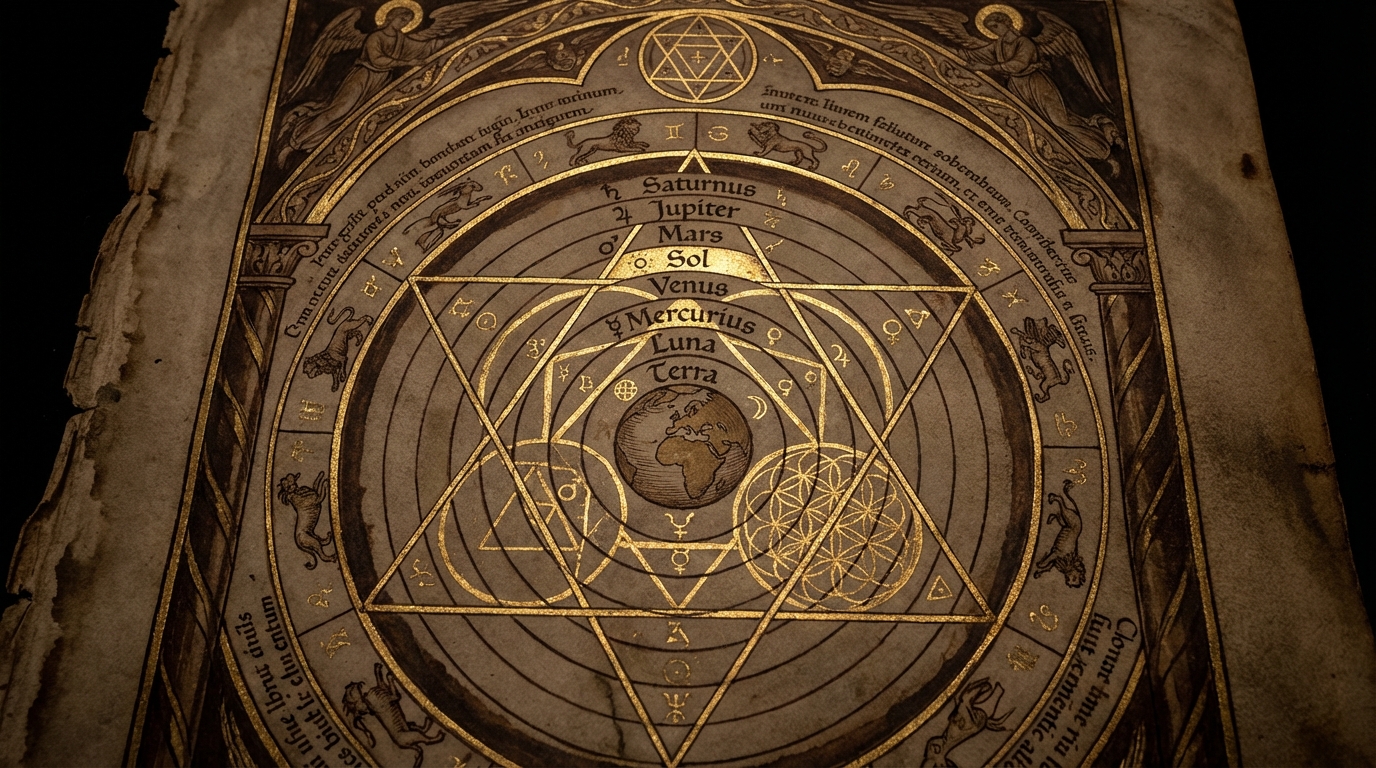
A structured guide to the seven principles popularized by The Kybalion.
Hermetic Philosophy
The seven Hermetic principles are best known from The Kybalion, a modern Hermetic text first published in the early twentieth century. They are not a complete summary of all ancient Hermetic literature, but they remain one of the most accessible frameworks for studying Hermetic philosophy.
Older Hermetic writings such as the Corpus Hermeticum and the Emerald Tablet approach similar concerns through divine mind, ascent, correspondence, and transformation. The seven-principle model gives modern students a clear map for those themes.
Reading about patterns is one thing.
Seeing how it applies to your own situation is different.
1. Mentalism
Mentalism teaches that mind is fundamental to experience. In simple language, the way consciousness perceives, names, and organizes reality matters. The principle does not require a careless denial of the physical world; it asks the student to observe the role of thought, attention, and imagination in every interpretation of the world.
Example: two people may pass through the same event and form different worlds from it because their inner assumptions, fears, and meanings are different.
2. Correspondence
Correspondence is the principle behind "As Above, So Below." It states that patterns repeat across levels: inner and outer, celestial and earthly, symbolic and practical. This is one of the strongest bridges between The Kybalion and older Hermetic language.
Example: a recurring emotional pattern may mirror a recurring relationship pattern. For a deeper study, read the Hermetic Law of Correspondence, then compare it with the practical map for repeating life patterns.
3. Vibration
Vibration describes reality as movement and degree. In Hermetic language, states are not fixed blocks. They shift, intensify, soften, rise, and fall. This principle gives symbolic language to transformation.
Example: an anxious state and a calm state are not just labels. They are different patterns of attention, body, breath, and expectation.
4. Polarity
Polarity teaches that opposites are often ends of the same continuum. Hot and cold are degrees of temperature. Confidence and fear may be different degrees of relation to the unknown.
Example: a person who feels powerless may not need an entirely new substance of courage. They may need to move along the same pole from collapse toward steadiness.
This is not random.
The same structure often appears across different people, periods, and decisions long before it becomes visible consciously.
Identify The Structure5. Rhythm
Rhythm describes cycles: movement outward and inward, growth and rest, ascent and descent. The principle is not fatalistic. It teaches observation of timing and proportion.
Example: creative energy may move in waves. A quiet phase is not always failure; it may be the return swing that prepares the next movement.
6. Cause and Effect
Cause and Effect teaches that outcomes arise from conditions. In Hermetic study, this includes visible actions and hidden causes such as beliefs, habits, environments, and repeated choices.
Example: a repeating life pattern may feel mysterious until its causes are traced through decisions, fears, loyalties, and timing.
7. Gender
Gender, in The Kybalion's symbolic vocabulary, refers to creative polarity and generation. A careful modern reading treats this as a symbolic principle of receptive and projective modes, not as a simplistic rule about biological sex or social roles.
Example: an idea may require both direction and gestation: the active impulse to begin and the receptive patience to let form develop.
Personal Relevance
If these principles feel personally relevant, you can explore them through the ARCANUM Oracle reading system.
Related Hermetic Sources
If you want to understand how this applies to you: